
Call Routing • 3 min read
How to Forward Calls in Twilanswer
Send inbound calls to another number with Forward or Forward with voicemail fallback. Learn destination, caller ID, and when to use call approval.
Forwarding is a call action you can choose when you configure a call route. Twilanswer offers two forwarding modes; the difference is what happens if the forwarded leg is not answered.
Forward call vs. forward with voicemail fallback
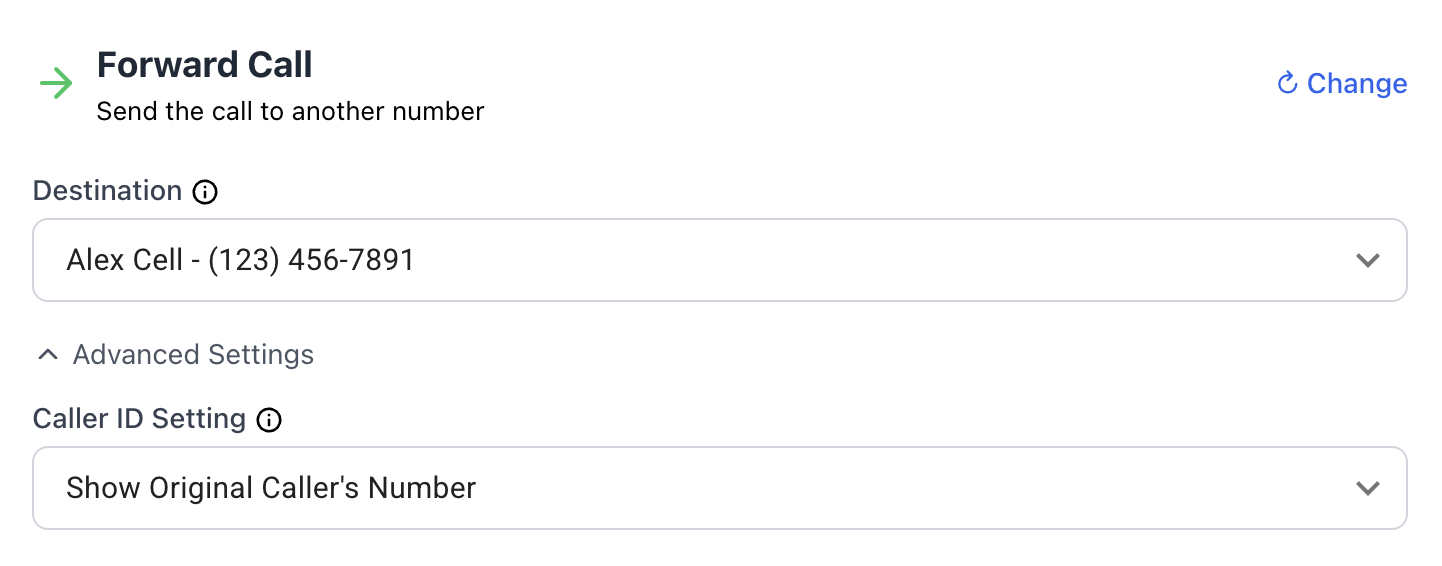
Forward call
With a standard forward, the call is sent to the destination number you choose (for example your mobile, a teammate, or an office line). If that phone is not answered, the call follows that phone’s normal behavior—typically the carrier’s voicemail on that line, not Twilanswer.
Forward with voicemail fallback
Forward with voicemail fallback also sends the call to your destination number first. If the call is not answered in a way Twilanswer can treat as “no answer,” the call falls back to Twilanswer instead of only the phone’s mailbox. You choose a recording that plays as the voicemail greeting; the message is stored in Twilanswer and can be delivered through notification channels you use elsewhere (email, SMS, Front, Slack, and so on).
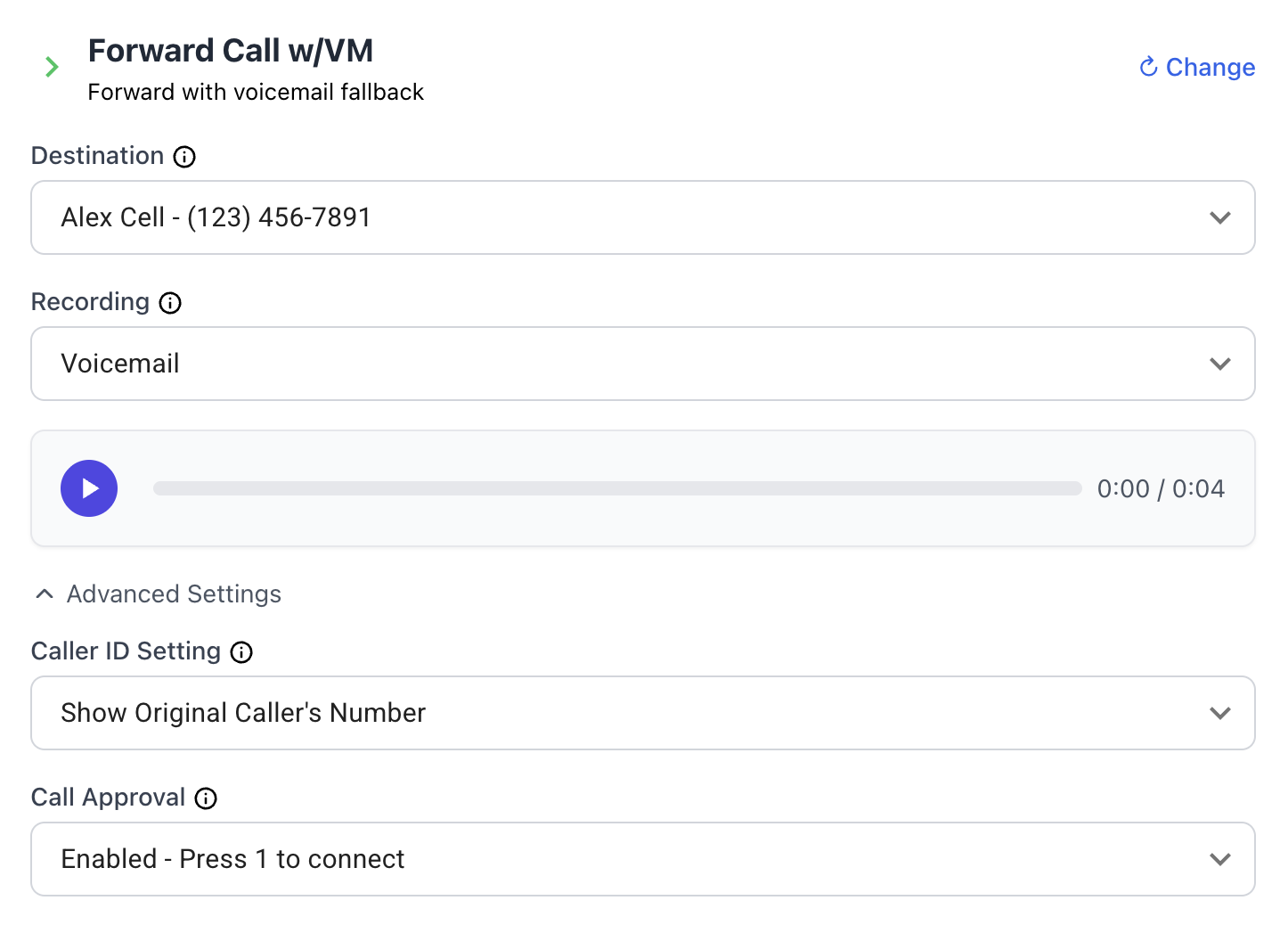
In short: plain forward → unanswered calls usually land on the destination phone’s voicemail. Forward with voicemail fallback → unanswered calls can be handled inside Twilanswer with your custom greeting, voicemail in Twilanswer, and routing to your channels.
What you need to configure
Destination (both modes)
For either forwarding type you set a destination—the number where the call should ring (your phone, someone on your team, an office line, etc.).
Voicemail recording (forward with voicemail fallback only)
When you use forward with voicemail fallback, you also choose the recording that callers hear if the call rolls to Twilanswer voicemail (the fallback path). That recording should match how you want unanswered business calls to sound.
Advanced settings
Caller ID (both modes)
Both forwarding types support caller ID options so you can control what appears on the destination phone:
- Original caller’s number — Useful when you want to see who is calling, especially if that number is already in your contacts.
- Your Twilio number — Useful when you want an obvious signal that the call is coming through your work line, so you can tell business calls apart on a personal device.
Which option fits best is up to you and how your team works.
Call approval (forward with voicemail fallback)
Call approval is available on forward with voicemail fallback. When it is enabled, answering the forwarded call does not connect you immediately—you (or the person at the destination) must press a key (for example 1) to accept the call. When it is disabled, the call connects as soon as the destination answers.
Why we generally recommend call approval
Call approval helps Twilanswer manage the handoff between the carrier and Twilanswer’s voicemail fallback:
- On many mobile networks, if a call is rejected or declined very early, the carrier may send the caller to your personal voicemail before Twilanswer can take the call back. Call approval gives Twilanswer a clearer path to reclaim the call for Twilanswer voicemail when you do not actually take the business call.
- If you don’t want to take the call, you can not press 1 to connect, end the call, or use the other keypad option your flow offers so the caller goes straight to Twilanswer voicemail instead of you taking the live call.
When you might turn it off
Some teams prefer immediate connect with no extra step (for example on a dedicated desk phone where rejection is rare). That can be easier for the callee, but you should understand the tradeoff above, especially on mobile phones.
Use How to Configure Call Routes for the full route workflow (hours, actions, notifications). To add audio used in these actions, see How to Create a Live Recording in Twilanswer and How to Upload a Recording in Twilanswer.